Tuesday, June 29, 2010

You and Your Dentist

How to get the most from your partnership

Think of the relationship between you and your dentist as a partnership, your dentist can offer a range of dental treatment options for many oral health problems. Theses option will vary in complexity, durability and cost but working together, you can choose the treatment options that best suit your needs and budget.

A good dentist will explain each treatment option, including it's benefits and drawbacks. It is important that you tell your dentist about yourself and your needs and you shouldn't be afraid to ask the dental team questions if necessary in order to help you understand their oral treatment recommendations.

The key to all good relationships is trust and understanding as it should be between you and your dentist, you should therefore try to build a relationships based on open and honest communication. A good dental team will be more than happy to explain the oral care program they are proposing for you but if you don't understand any aspect you may want to ask some or all of the following questions.


  • Can you give me a step by step breakdown as you make your oral examinations?

  • What are the treatment options in respect of my specific needs?

  • Are there any alternative treatments I should consider?

  • Which of these options would give me the best outcome?

  • What needs to be treated now and what can wait to be treated later?

  • What can I do in future to avoid similar problems reoccurring?

Concerns

Confidence and trust are key factors when visiting your dental team, a dental expert said, "Dentists are trained to understand their patients worries and cam empathize with them. Your dentist should be an expert, not just in technical dentistry but in communication, empathy,
understanding and be able to deliver care in a professional manner". He also stated "that cost was actually quite low on their list of concerns, a hygienic, friendly environment is more important for most people".


Many people have a level of anxiety when visiting their dentist, probably based on a bad experience from their childhood when dental techniques were not as good as they are today. Things are somewhat different today as modern dental care and new techniques and advances
mean that the discomfort you may remember from your childhood is considerably less today.

Advice

Don't wait for your dentist to sort out your problems, our expert stated "Avoid problems by sticking to a good mouth care routine in the first place, healthy teeth are within everyone's reach".


Remember you and your dentist are a team and good oral health is your goal.


About the Author

Tony Forster has a keen interest in dental care and bad breath treatment and has compiled many useful resources at: www.eliminate-bad-breath.info

The content of this article is for information purposes only, it is advisable to consult your medical or dental practitioner before implementing any program or change to your current regime.


Monday, May 17, 2010

The Nitty Gritty with Flossing

The surfaces that are between teeth are not accessible to brush; therefore, the best way to clean them is by flossing. The frequency of flossing is like brushing and ideally after each meal, though one time a day (before going to bed) is the minimum necessary.

flossingflossing2

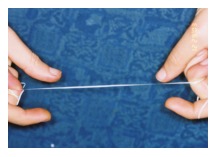
To start, cut a piece of dental floss (approximately 2 feet). Wrap both sides of the floss around your middle fingers. Using your index and thumb, glide the floss in between all your teeth one by one. When flossing, make sure you are not cutting your gums. The goal is to clean the teeth surfaces, not the gums. In the space in between teeth, press the floss against each side of the tooth (hug the tooth) and gently move it back and forth and up and down. Then move to theopposite surface of the adjacent tooth.

Make an appointment with Dr. Desai or call the office for more information! 925-999-9088.

Thursday, April 29, 2010

Pain in Your Jaw? Read Below...

TMJ is the joint that connects the lower and upper jaw. The term TMJ stands for Temporo-mandibular Joint. This is one of the most complex joints in the entire body, capable of forward and backward movement, rotations, and side-to-side movements. TMJ often refers to complications and problems with this joint. Some of the most common symptoms of TMJ problems are:tmj
  • Pain

  • Limited movement of the lower jaw

  • Clicking sounds

  • Muscle spasms

  • Locking of the jaw

Some potential causes of the disease include genetics, hormones, low-level infections, auto-immune diseases, trauma, and clenching or grinding of the teeth. Diagnosis and evaluation of such conditions are performed by dentists experienced in TMJ problems and treatments. Some common treatments are Night Guards, Bite Guards, and Bite Adjustments. Your dentist can guide you toward the best treatment for you.

If you experience any TMJ problems or symptoms please let us know. Dr. Desai will be happy to evaluate your situation and offer the best treatment possible.

Monday, April 5, 2010

See what Maria had to say About Dr. Desai!

"Hi my name is Maria, I've been a patient of Dr. Prajesh Desai for about ten years.

I have received several treatments including root canals, crowns, bridges and veneers, which are the most exciting experiences in my dentist's records.

The veneers are giving me a new look, I'm very happy, now that I can proudly smile and feel the confidence of an image that I have always dreamed of; Terrific job Dr. Desai!

I highly recommend Dr. Desai for veneers and any other dental practice I'm truely impressed of his professional abilities. He's an excellent doctor and I am pleasured to be a patient of his."

Maria

Wednesday, March 17, 2010

If Brushing is NOT Enough, Look at Your Diet for Help!

Sugar is the main cause of dental decay when there are bacteria present. More significant than the amount of sugar you eat is the frequency of consumption.
diet

Probably the worst thing you can do to your teeth is to drink a soda and
have a sip every few minutes over a long period of time; the same is true for snacking. It is recommended that if you want to have a snack or soda or juice it is better to have it after food, as dessert, or have it in one sitting. Eating or drinking something sweet over an extended period of time creates a constant supply of sugar for bacteria that causes tooth decay!

It is important to be aware of all the sources of sugar that are out there. It is not just everything that is sweet, but anything that can turn to sugar like pieces of bread. Cutting down your sugar intake is good for cavity prevention, as well as your general health.

But what about when you have to have sugar? The best way to avoid cavities is to prevent the sugar from staying next to your teeth. Brushing after eating sugar, rinsing your mouth with Fluoride mouth wash, or chewing sugarless gum can help. However, nothing has the effect of avoiding sugar!

Is there any kind of food that prevents tooth decay? Well, not really. Some people believed that chewing foods like apples and carrots may have some plaque removal effect, but they still contain some sugar so any advantage is not clear.

Another group of food that causes significant damage to teeth structure is acidic foods. If in frequent contact with teeth, things like lime, lemon, and grapefruit can cause serious irreversible damage (erosion) to your teeth.

Tuesday, February 23, 2010

How to Brush Your Teeth the Correct Way!

The first step is to choose a good toothbrush. You always want to use a soft brush with a small head. A soft brush is hard enough to remove plaque, yet gentle enough not to damage your teeth or gums.


toothbrushtoothbrush 2


toothbrush3toothbrush4

The next issue is to select good toothpaste. In general, any toothpaste that contains Fluoride will do the job, unless you have special needs that are determined by your dentist. Two of the best brands of toothpastes are Colgate Total and Crest Multicare.

The first rule of brushing is to start from a specific location and work your way to the opposite side, continuing all the way through the whole mouth so that you end where you started. This way you won't miss any area. Usually a pea-sized amount of toothpaste is enough. An adequate brushing should at least take 2 minutes and preferably around 4 minutes.

There are a variety of techniques for brushing your teeth, but one of the most popular ones is described here:

Hold the brush at a 45 degree angle toward the teeth and gums. Gently press against the gums so the tips of the bristles go in between the gum and the teeth. Then apply a few lateral strokes and roll down the brush to sweep the plaque away from the teeth and the gum. Repeat this motion 6 to 10 times and move on to the next area of 2 to 3 teeth. If your mouth is full of foam, spit out and continue brushing. Your brushing is completed when you have brushed all the surfaces of your teeth, not when your mouth is full! On chewing surfaces, short strokes work best to get the plaque out of the grooves and pits. When brushing the back side of your front teeth, hold your brush vertically to be able to reach the teeth better.

As far as frequency of brushing is concerned, ideally you want to brush your teeth after each meal. But if you can’t, brush at least twice a day- after breakfast and before going to bed.